



In complex terrestrial ecosystems there are some species that play an oversized role in maintaining the biodiversity, structure and functioning of those systems. These species are called “keystone” species and like the keystone at the top of a stone arch their presence is essential to the stability and functioning of the whole structure. Perhaps this is most clearly demonstrated when a missing keystone species is restored and the entire structure changes toward more complexity and stability.
The most recent example of this is the re-introduction of wolves to Yellowstone National Park, and the resulting changes in herbivore composition and behavior. This in turn led directly to the re-establishment of plant and animal communities that had largely disappeared. In tropical rainforests, there can be several keystone species affecting different components of the system, the absence of any one of which will lead to major disruption of a critical ecosystem component and the eventual loss of the full biodiversity within the system.
Some examples of this are dominant fruiting trees which provide food and shelter for many animal and plant species, apex predators which control small mammals and birds of the forest floor allowing for a healthy understory, aerial predators which control canopy-dwelling species, and animals which disperse seeds by regurgitation or defecation away from their source constantly restoring the forest.
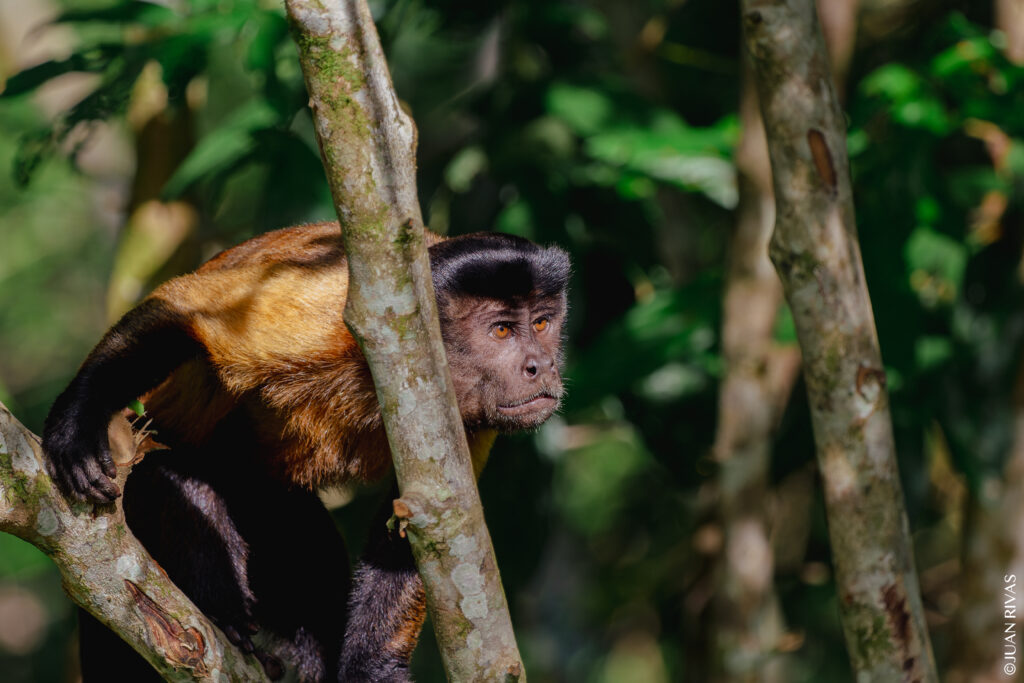
Monkeys are considered keystone species in tropical forests across Asia, Africa, and the Americas, as they play a vital role in maintaining forest dynamics through seed dispersal. They are estimated to be responsible for 60–70% of all seed dispersal in these ecosystems. In the Colombian Amazon, for example, around 90% of plant dispersal is mediated by animals rather than by wind or water, highlighting the important role of frugivorous primates. By spreading seeds across large areas, monkeys contribute to forest regeneration and the long-term resilience of rainforest habitats that support a wide range of wildlife, including larger fauna (Lizarralde, 2020) .
How do monkeys perform this role and make themselves indispensable for tropical forests?
First, monkeys disperse seeds by spitting them out or defecating them encased in their own nutrient source. Having experienced a troop of 70 chimpanzees, feeding in the canopy, I can verify the constant rain of steady, pre-fertilized seeds to the forest floor. In addition, some monkey species visit the same areas repeatedly for waste elimination, creating nutrient-rich sites for biodiversity and helping maintain a healthy forest understory.
Second, primates are both diverse and abundant. Africa has 107 species, Asia 133, and the Neotropics 187 species Primate size varies by region from 450-pound Mountain Gorillas (Gorilla beringei beringei) of Africa to 300-pound Orangutans of Southeast Asia (Pongo pygmaeus). The Woolly Spider Monkey (Brachyteles hypoxanthus ) is the largest species in the Neotropics weighing just under 35 pounds. The largest arboreal species are the Orangutan of Southeast Asia and the Chimpanzees of Africa (Pan troglodytes) which weigh half as much.
Third, although a few primates, such as male orangutans, are solitary most primates exist in family groups, or in troops of between 20 and 100 individuals. As such, they are highly effective at finding ripe fruit and dispersing many seeds over a large area . Diet affects both how fast monkeys move through the forest and how far they travel daily. High energy diets, which include fruit, but also proteins and fat from bird and reptile eggs, small mammals, honey and insects support wider foraging. Monkeys with lower energy diets such as leaf-eating monkeys tend to be found lower in the canopy and move less often . Because of their size and abundance, primates can control animal populations of other arboreal species and maintain continuity and balance within the system. Primate feeding activity also contributes substantially to pollination while they search for food . Primary tropical forest with an intact, natural primate fauna can disperse small to large seeds over large distances from the seeds’ source with a greater likelihood that the germinating seed will not compete with the parent plant.
Lastly, primates themselves serve as a food source for both terrestrial and aerial predators. Harpy Eagles of South America (Harpia harpyja) prey on sloths and monkeys as their primary food sources , while in Africa, the African Crowned Eagle (Stephanoaetus coronatus) and in Southeast Asia, monkeys are a major part of the Philippine or “Monkey-eating eagle’s” (Pithecophaga jefferyi) diet.
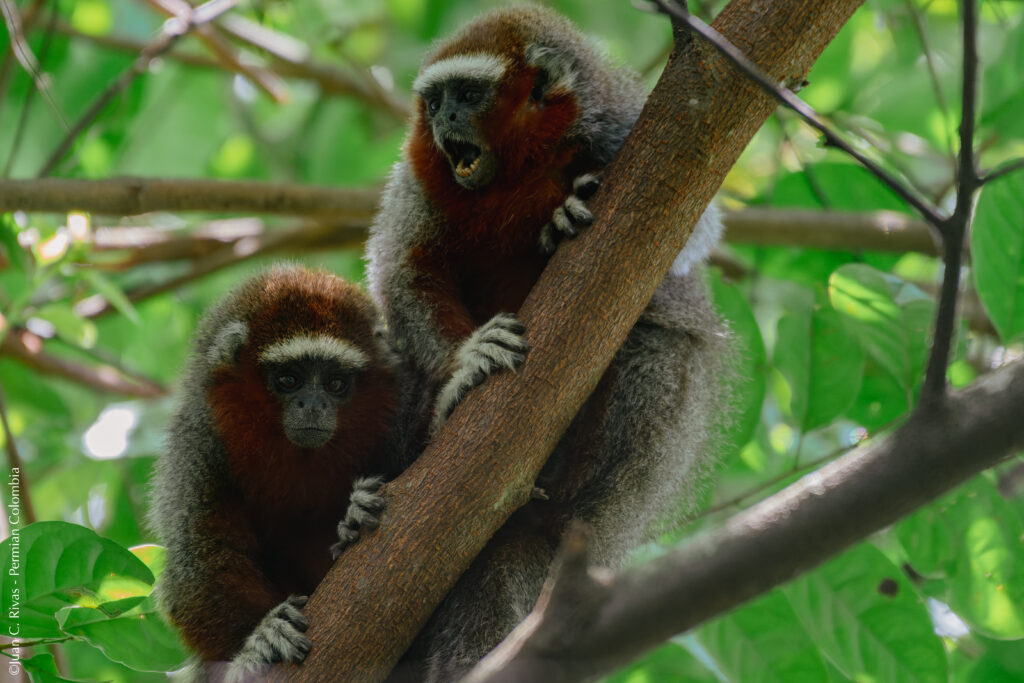
Given the extreme importance of primate populations to the health and stability of tropical forests, how are primate populations faring given the increase in human population, and
the ongoing changes in climate?
The answer is: not well. The International Union for the Conservation of Nature and Natural Resources, (IUCN) classifies 60% of all primate species as near threatened to critically in danger of extinction as follows :
Madagascar 87%; Asia 73%; Africa 37%; Central and South America; 42 %
For all primates, 75% have decreasing populations. In addition, over fifty species are listed on Appendix I of the International Convention on Trade of Endangered Species of Wild
Fauna and Flora (CITES) for which all trade is prohibited . Despite these regulations and our knowledge, primate populations continue to dwindle due to the high demand of primates for local consumption , for high value export as bushmeat, for medical research, for pets and exhibition, and due to direct killing as crop competitors. Add these multiple demands
to an uncertain and changing climatic future, and it is easy to see that every effort should be made to save primates within their natural habitats in large, protected areas which have
the greatest chance of survival for the species.
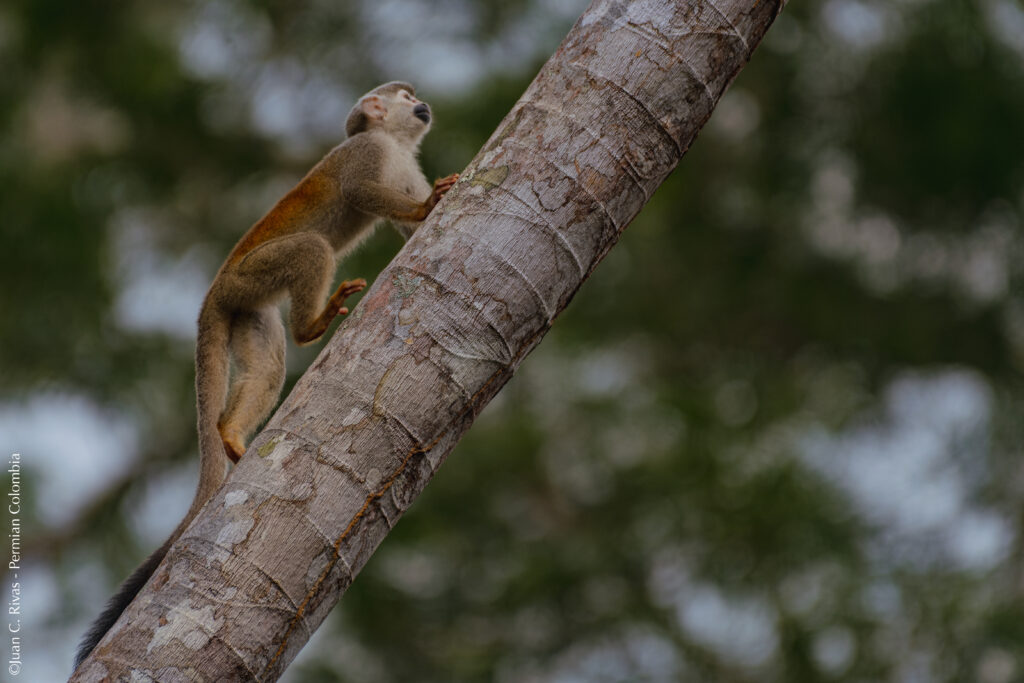
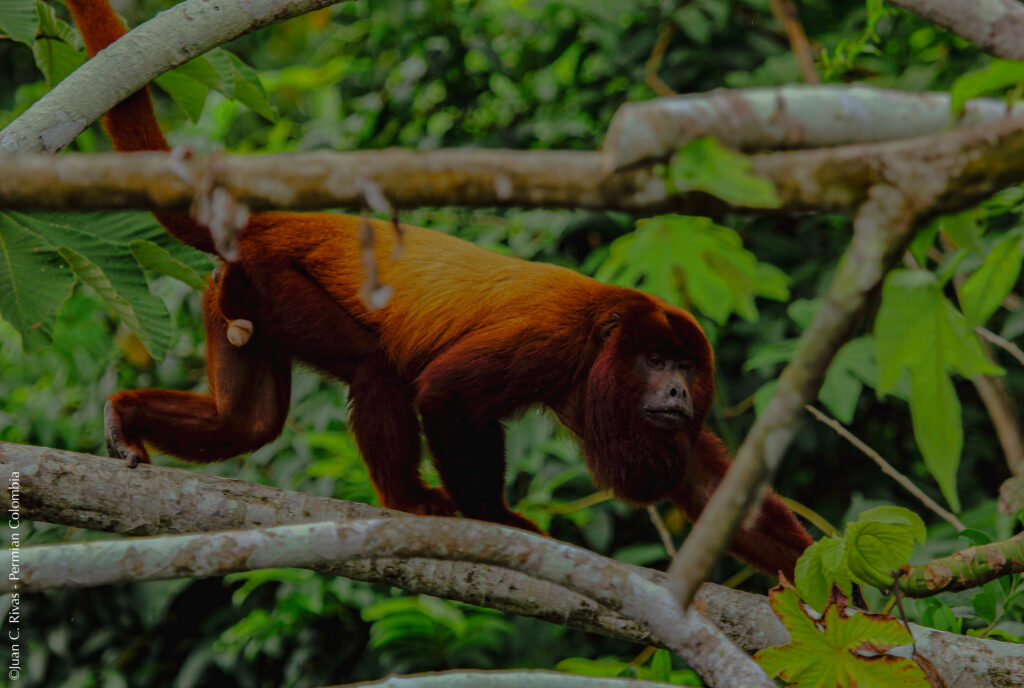
This is one of the roles that Permian, as an organization that restores and protects tropical forests for carbon sequestration, can play to protect both primates and the forests in which
they live. A follow up article by other Permian staff will examine the primates that are found within Permian managed forests and the role those species play in protecting the forests and the biodiversity found there.
Photos courtesy of Juan C. Rivas, Conservation Manager Permian Colombia
References
https://www.jaguarrescue.foundation/en-us/News/ArticleID/82/Sowing-Seeds-The-Crucial-Role-of-Spider-Monkeys-in-Seed-Dispersal, last accessed 11-11-2025
Schwitzer, C., Mittermeier, R.A., Rylands, A.B., Chiozza, F., Williamson, E.A., Byler, D., Wich, S., Humle, T., Johnson, C., Mynott, H., and McCabe, G. (eds.). “Primates in Peril: The World’s 25 Most Endangered Primates 2018–2020”. IUCN SSC Primate Specialist Group, International Primatological Society, Global Wildlife Conservation, and Bristol Zoological Society, Washington, DC. (c) 2019, at pg. 3
Lizarralde, Manuel “How Do Monkeys Create Tropical Rainforests? A New Ethnobotanical Perspective” Reviste – Harvard Review of Latin America, Spring/Summer 2020, Vol. 19, No. 3
Aurélie Albert, Alain Hambuckers, Laurence Culot, Tommaso Savini, Marie-Claude Huynen; “Frugivory and Seed Dispersal by Northern Pigtailed Macaques (Macaca leonina), in Thailand” International Journal of Primatology, Volume 34, No. 1, February 2013, DOI 10.1007/s10764-012-9649-5
“Primate Seed Dispersal and Forest Restoration: An African Perspective for a Brighter Future”, , International Journal of Primatology, Vol. 39 No. 3, June 2018, DOI:10.1007/s10764-018-0049-3
https://www.britannica.com/animal/woolly-spider-monkey, most recently accessed 11-12-2025
Convention on International Trade in Endangered Species of Wild Fauna and Flora (CITIES), Appendix 1, Pub. 21 May 2023
“Food Habits of the Harpy Eagle, a Top Predator from the Amazonian Rainforest Canopy”, March 2014, Journal of Raptor Research Vol. 48 (1): Pg. 24-35, DOI:10.3356/JRR-13-00017.1
Convention on International Trade in Endangered Species of Wild Fauna and Flora (CITIES), Appendix 1, Pub. 21 May 2023
“Primate Seed Dispersal and Forest Restoration: An African Perspective for a Brighter Future”, June 2018, International Journal of Primatology Vol. 39 (3), DOI:10.1007/s10764-018-0049-3
Eckhard W. Heymann, “Florivory, Nectarivory, and Pollination – A Review of Primate-Flower Interactions” Ecotropica Journal Vol. 17: Pp. 41–52, © 2011
“Seed Dispersal by Primates and Implications for the Conservation of a Biodiversity Hotspot, the Atlantic Forest of South America”, International Journal of Primatology Vol. 37 No. 3, June 2016, DOI:10.1007/s10764-016-9903-3
“Food Habits of the Harpy Eagle, a Top Predator from the Amazonian Rainforest Canopy”, March 2014, Journal of Raptor Research Vol. 48 (1): Pg. 24-35, DOI:10.3356/JRR-13-00017.1
https://www.iucnredlist.org/species/160881218/17928341
Convention on International Trade in Endangered Species of Wild Fauna and Flora (CITIES), Appendix 1, Pub. 21 May 2023
Alejandro Estrada 1,*, Paul A Garber 2,*, Anthony B Rylands 3, Christian Roos 4, Eduardo Fernandez-Duque 5, Anthony Di Fiore 6, K Anne-Isola Nekaris 7, Vincent Nijman 7, Eckhard W Heymann 8, Joanna E Lambert 9, Francesco Rovero 10, Claudia Barelli 10, Joanna M Setchell 11, Thomas R Gillespie 12, Russell A Mittermeier 3, Luis Verde Arregoitia 13, Miguel de Guinea 7, Sidney Gouveia 14, Ricardo Dobrovolski 15, Sam Shanee 16,17, Noga Shanee 16,17, Sarah A Boyle 18, Agustin Fuentes 19, Katherine C MacKinnon 20, Katherine R Amato21, Andreas L S Meyer 22, Serge Wich 23,24, Robert W Sussman 25, Ruliang Pan 26, Inza Kone 27, Baoguo Li 28 “Impending extinction crisis of the world’s primates: Why primates matter” Science Advances Journal,
https://pmc.ncbi.nlm.nih.gov/articles/PMC5242557/, Jan 18, 2017; Vol. 3, No.1 doi: 10.1126/sciadv.1600946
For more news click HERE