




Dung beetles might not be the first creatures that come to mind when you think about tropical forest species — but dig a little deeper, and you’ll discover that these invertebrates play a vital role in keeping rainforest ecosystems healthy and resilient. By burying and breaking down dung, they help recycle essential nutrients back into the soil. In the process, they disperse seeds, support plant regeneration, and improve soil structure by tunneling through the earth, aerating it and helping water penetrate deeper into the ground.

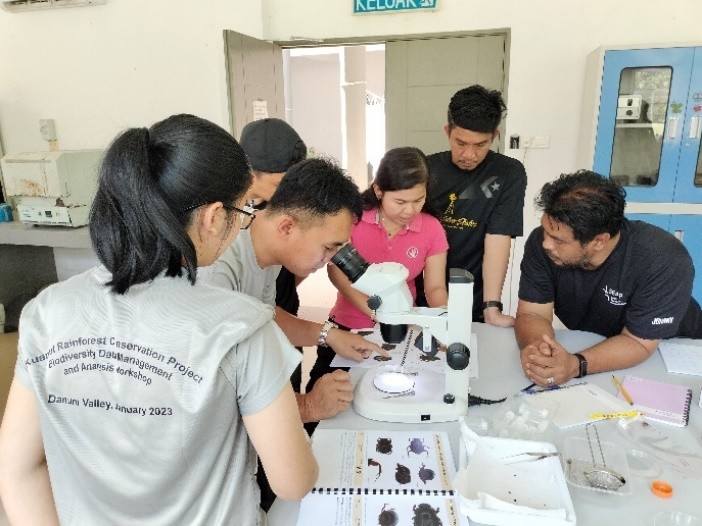
Coprophagic — or dung-feeding — beetles in the order Coleoptera and superfamily Scarabaeoidea, depend primarily on vertebrate (e.g., mammal) dung for both feeding and reproduction. This makes their occurrence closely tied to the presence and diversity of mammals in forest ecosystems. Dung beetles are valuable indicators of forest health because they are not only dependent on mammals, but also highly sensitive to changes in their environment. When mammal populations decline, due to habitat loss, fragmentation, or hunting, it can directly impact dung beetle diversity and abundance, providing insight into broader ecosystem changes.
Dung beetles of Borneo
There are thought to be more than 300 species of dung beetles in Borneo, with over 200 recorded in Sabah alone. These beetles are often grouped into three functional categories based on how they use dung:
- Rollers (Telecoprids): These beetles shape dung into balls and roll it away from the source to bury it. In Kuamut, species like are large, powerful rollers typically found in high-quality forest habitats.
- Tunnelers (Paracoprids): Tunnelers dig directly beneath dung and bury it in underground chambers. Species such as Catharsius dayacus, a forest specialist found in our project area, are nocturnal tunnelers that is endemic to Malaysian Borneo. This species is often present in undisturbed forests at high abundance but may also occur at logged forests and riverine reserves.
- Dwellers (Endocoprids): Rather than moving dung, dwellers live and breed directly within it. Species such as Oniticellus tesselatus tends to be smaller and constructs a simple nest beneath the dung pat.
Each functional group plays a distinct ecological role, and their varied sensitivities to environmental change make dung beetles particularly useful for understanding the impacts of habitat disturbance and forest recovery.
Threats to dung beetles
Dung beetles in Borneo face a range of threats, primarily from habitat loss, degradation, and fragmentation due to logging, agriculture, and the expansion of oil palm plantations. These land-use changes not only reduce suitable forest habitat but also disrupt mammal communities that dung beetles depend on for dung. Forest specialists such as large rollers and nocturnal tunnelers, are particularly vulnerable and often disappear from degraded or converted landscapes.
Additional pressures like hunting, which are known to reduce large mammal populations, can further threaten dung beetle communities. Conserving dung beetles requires more than just protecting individual species, it means safeguarding entire ecosystems. This includes protecting large, connected areas of intact forest, safeguarding mammal populations, and preventing further degradation through unsustainable land-use practices.
Protecting and monitoring dung beetles
By minimizing disturbance and maintaining ecosystem functions in forest habitats, we can support dung beetle communities and the vital roles they play in sustaining healthy forest systems. These ecologically important beetles are found across all our project sites — from Borneo to Brazil — and are being actively monitored in the Kuamut Rainforest Conservation Project (KRCP) in Sabah by the Permian Global and SEARRP (South East Asia Rainforest Research Partnership) field teams, in collaboration with researchers from Nanyang Technological University (NTU) Singapore.
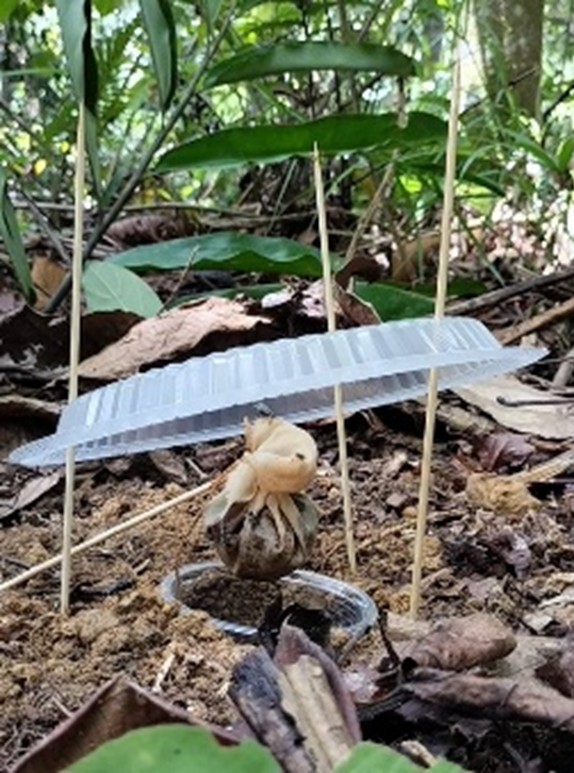
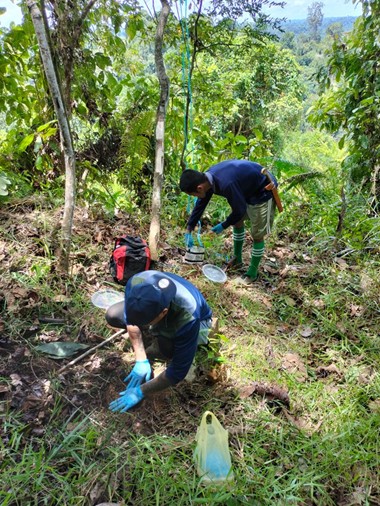
In the KRCP, dung beetles will be monitored across a network of sites using dung-baited pitfall traps. A pilot survey conducted in 2022 confirmed that the project area holds high biodiversity value for dung beetles, and the findings will inform a standardized monitoring program beginning in 2025. The main goal is to track changes in the presence, abundance, and community composition of key dung beetle species, providing insights into how forest regeneration and recovery influence invertebrate biodiversity.
To complement this, camera traps will be deployed at many of the same locations to monitor mammal communities. This dual approach allows us to examine how changes in mammal populations, which dung beetles rely on, influence dung beetle diversity and distribution, helping us build a more comprehensive picture of ecosystem recovery within the project area.
Acknowledgements
We would like to thank Drs Eleanor Slade and Chiew Li Yuen from Nanyang Technological University Singapore for their invaluable advice and expertise on dung beetle monitoring in the KRCP, and the SEARRP field team for their work collecting data during the 2022 pilot study.
For more species focus articles, blogs and news click HERE
Kuamut Rainforest Conservation Project, Malaysia – Permian Global
SEARRP – We’re conducting some of the most impactful rainforest research in the world.