




In the Rio Cautário RESEX, the guariba — also called the red howler monkey or screaming monkey — helps tell the story of the forest and the communities that live from it. Known for its powerful chorus at dawn and dusk, the group makes itself heard over long distances, with vocalizations that echo between the canopies and resonate throughout the territory. This sound is not that of a jaguar; it is that of a social primate that organizes its life in a troop and uses the forest itself as shelter, food, and pathway.
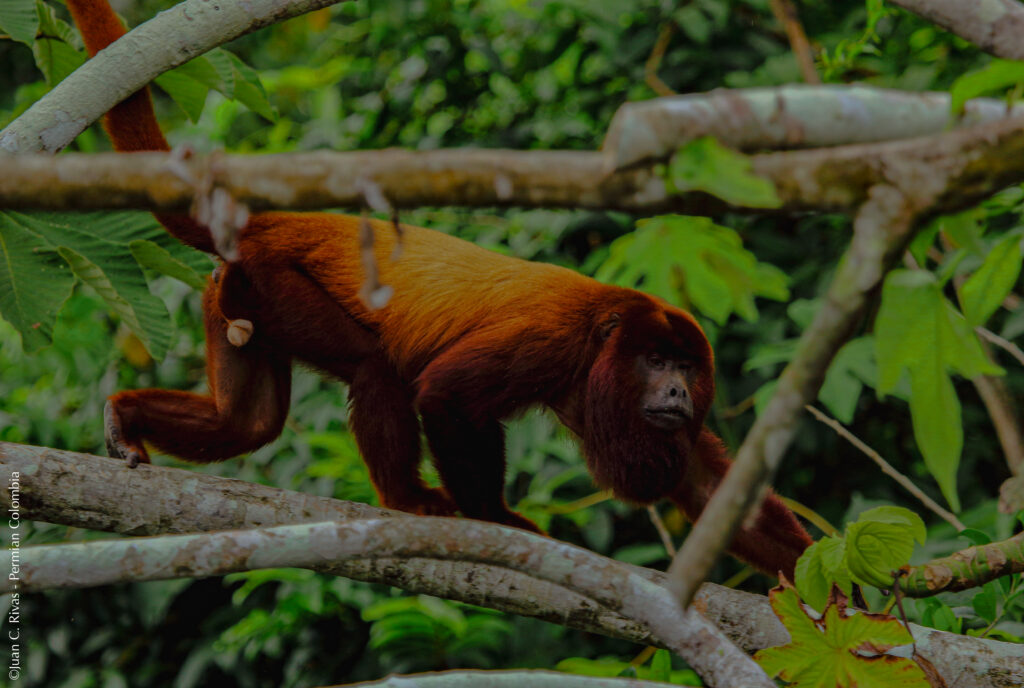
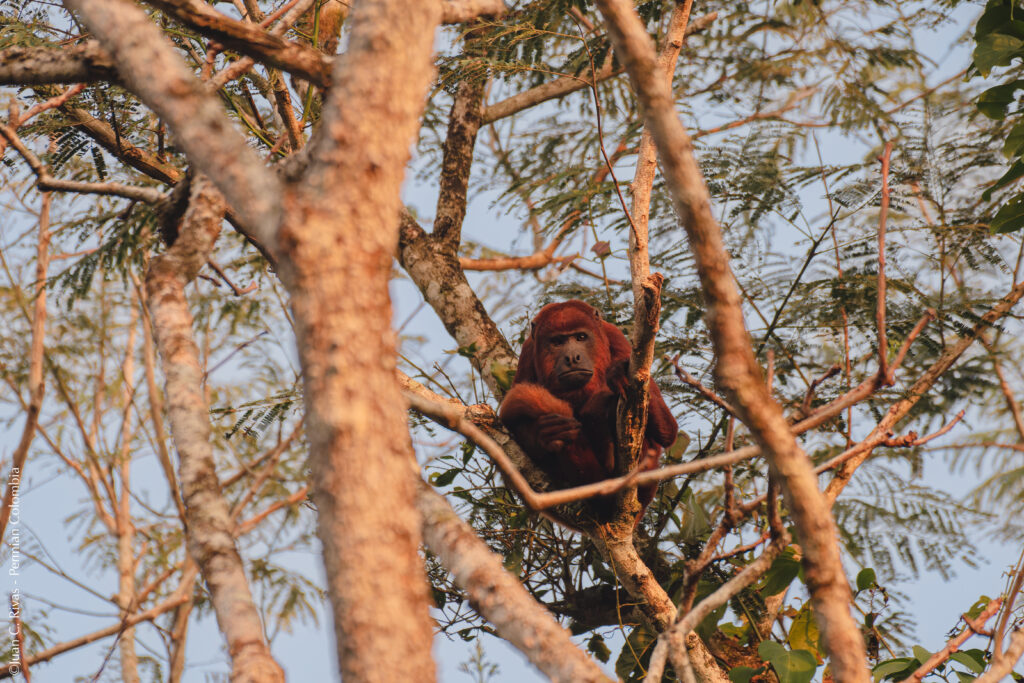
Until recently, the Amazonian red howler monkey was treated as a single species with subspecies. With taxonomic revisions, some of these subspecies were elevated to species status, and the guariba associated with the southwestern Amazon came to be recognized as Alouatta puruensis. This primate occurs between large rivers across wide areas that include Rondônia, as well as portions of Acre, southern Amazonas, and northwestern Mato Grosso, composing the mosaic of life that the Rio Cautário RESEX protects.
The Alouatta genus is recognized for a striking characteristic: the power of its voice. Dominant males lead the group’s “singing,” but other individuals also participate in the chorus. This power has an anatomical basis: a specialized bone in the throat, the hyoid, amplifies resonance and allows the sound to carry for minutes. At the same time, there is a notable contrast: despite being vocally intense, howler monkeys display energy-conserving behavior.
Like many primates, they are gregarious. Groups range from two to 16 individuals, with an average of around five to six. There is a dominant alpha male and a polygamous social system: the dominant male usually has mating priority, but younger males may also attempt to mate, and females can engage with more than one male — though group dynamics impose limits and disputes. Gestation lasts six months and the interval between births is around 16 months, reflecting the extended period of care required for offspring.
The red howler monkey is a canopy animal: it moves at a calm pace, using a prehensile tail that supports the body and provides security between branches. Rather than long leaps, it prefers routes where trees grow in close proximity. Females are smaller, measuring between 48 and 63 centimeters in head-and-body length, with a tail that can reach 80 centimeters. Males weigh around 7.5 kilograms and females about 6 kilograms. Crown predators — such as large birds of prey like the harpy eagle, and large arboreal snakes such as the boa constrictor — may attack juveniles and young animals, while adults, especially males, tend to be less vulnerable due to their size and weight.
In terms of diet, the guariba stands out for consuming leaves and fruits, with seeds and insects also recorded. This diet explains an important behavioral pattern: they spend about 70% of their time resting. Even so, their ecological role is clear. By consuming fruits, they disperse seeds throughout the area covered by the group’s movements, contributing to plant regeneration at various points in the forest. In some cases, the passage of seeds through the digestive tract helps break dormancy and promotes germination, reinforcing the direct relationship between fauna and vegetation renewal.
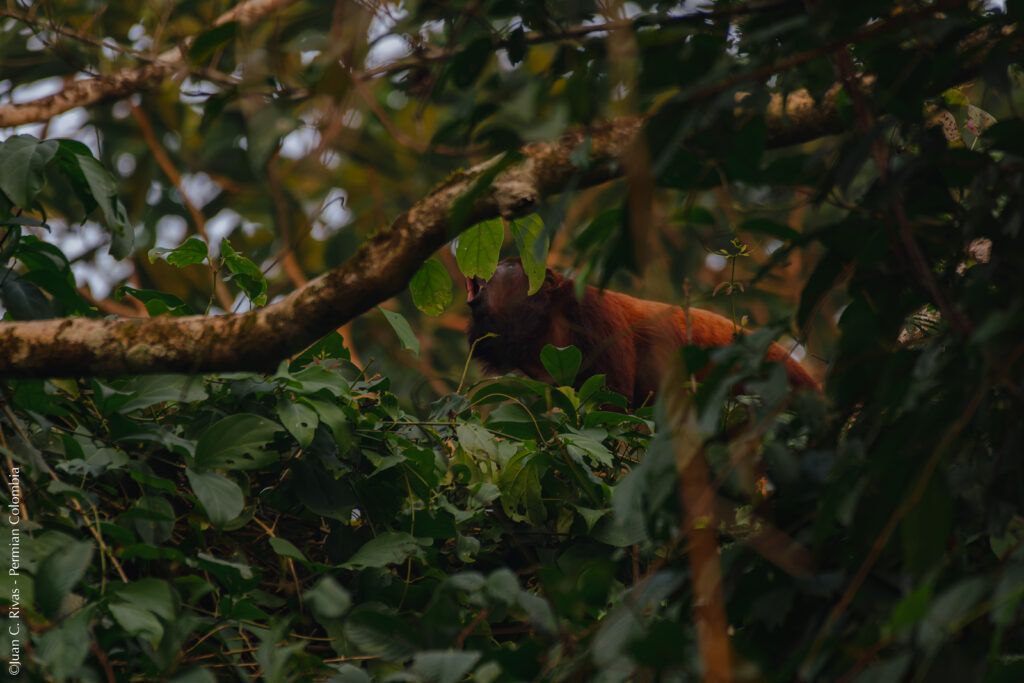
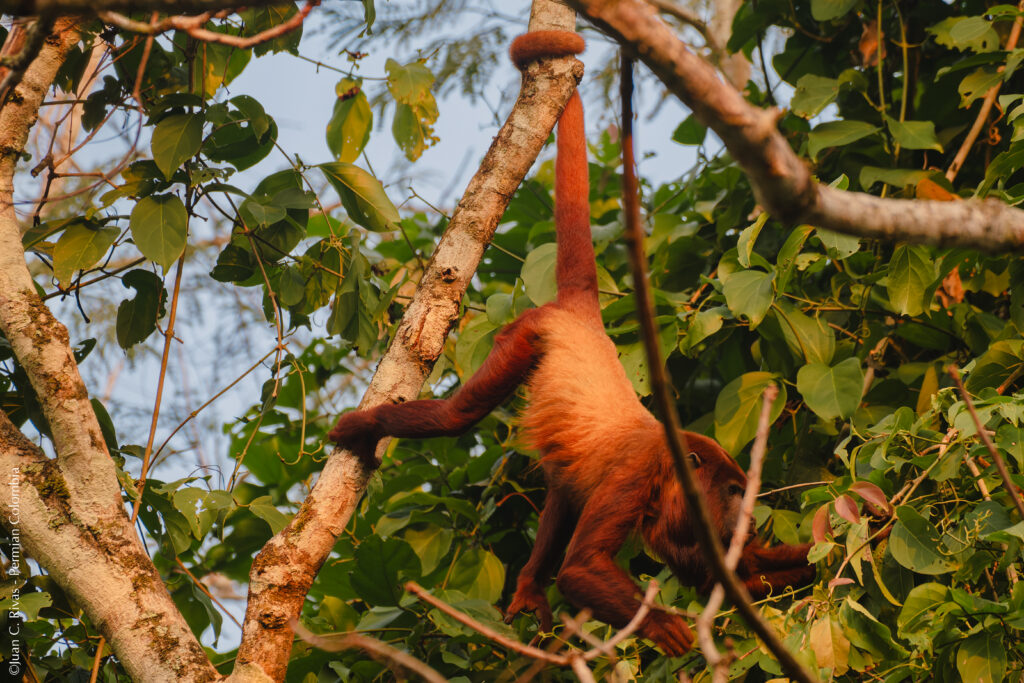
The preferred habitat of Alouatta puruensis includes seasonally flooded forests, such as floodplains and areas near water, although the species also occurs in upland forests. This preference helps explain variations in abundance: in Rondônia, preliminary studies indicate relatively low densities and smaller groups, while in other Amazonian areas more numerous groups may occur. Regarding home range, estimates suggest that a group may depend on around 50 hectares, making forest continuity a determining factor for the long-term maintenance of populations.
The greatest reported threat is not hunting, but habitat loss and fragmentation: deforestation and landscape degradation reduce connectivity, shrink suitable areas, and limit the presence of groups. Hunting appears as an additional factor in some contexts, including in association with the dietary preferences of certain ethnic and traditional groups, which can make animals more skittish and scarce in certain regions. Nevertheless, the main pressure remains linked to forest integrity.
Another relevant aspect is the relationship between howler monkeys and public health. Primates are vulnerable to mosquito-borne diseases, and howler monkeys, because they move more slowly and remain at rest for long periods, may be even more exposed to bites. During yellow fever outbreaks, for example, howler monkeys can fall ill and die, functioning as natural sentinels of the virus’s circulation in a region. They are not vectors responsible for transmitting the disease to people; they are victims, just as humans are. Misinformation, however, has already led to the persecution and killing of animals, which reinforces the importance of environmentally sensitive education in the territory — education capable of engaging with local beliefs without stigmatizing species.
In the Rio Cautário RESEX, telling the story of the guariba means talking about forest conservation grounded in evidence drawn from the ecosystem itself, connecting biodiversity, health, and ways of life. The Nature Conservation Project of the Rio Cautário RESEX strengthens this vision by valuing the standing forest and the community as an active part of territorial stewardship. This approach aligns with Nature-Based Solutions and expands the credibility of initiatives associated with the carbon market and climate finance, particularly when they encompass benefits for biodiversity and local well-being. Nature conservation projects matter because they sustain essential services, ensure habitat continuity, and keep alive the relationships between forest, fauna, and community — like the voice of the guariba, which continues to mark the rhythm of the Rio Cautário RESEX.
Learn more about the Nature Conservation Project of the Rio Cautário RESEX here
For more news click HERE